Free VET PD – Back to Basics in Training Delivery

10 Things Good Trainers Do
What’s the better question for a trainer to ask themselves before teaching?
“How will I teach this?”
or…
“How will my students learn this?”
Shifting this perspective is an important step in becoming a great trainer.
We explored this concept and more in our recent professional development session. We run these for free for anyone involved in education who wishes to build their skills and understanding in vocational teaching and learning.
You can watch the recording here or read on for an overview.
1. Good trainers work to achieve outcomes, not ‘deliver content’
Good trainers don’t plan to ‘teach content’, they plan for learners to achieve outcomes.
This means they plan methods for achieving outcomes.
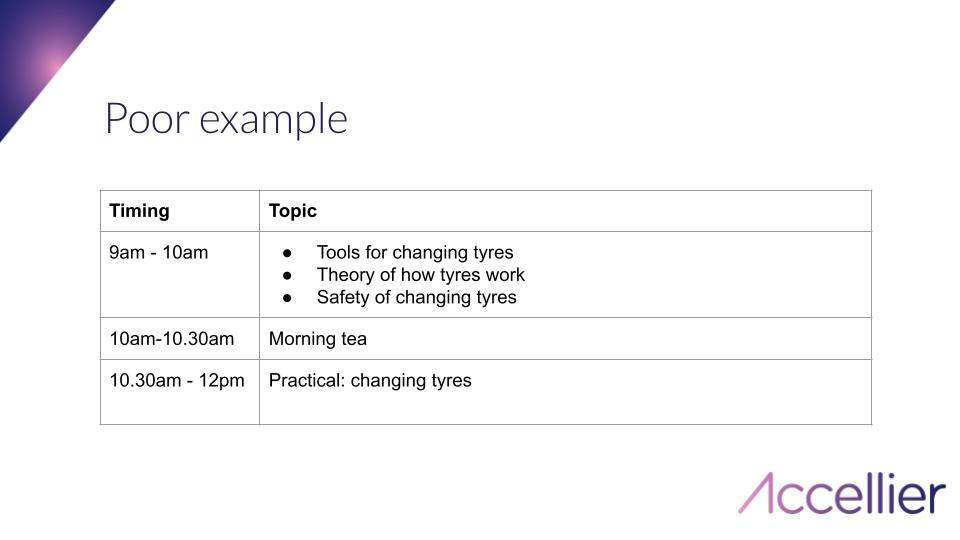
In this example of a lesson plan we see mostly planning for content delivery. It gives the reader no indication of what must be achieved with the students, nor does it help the teacher know how to deliver it.
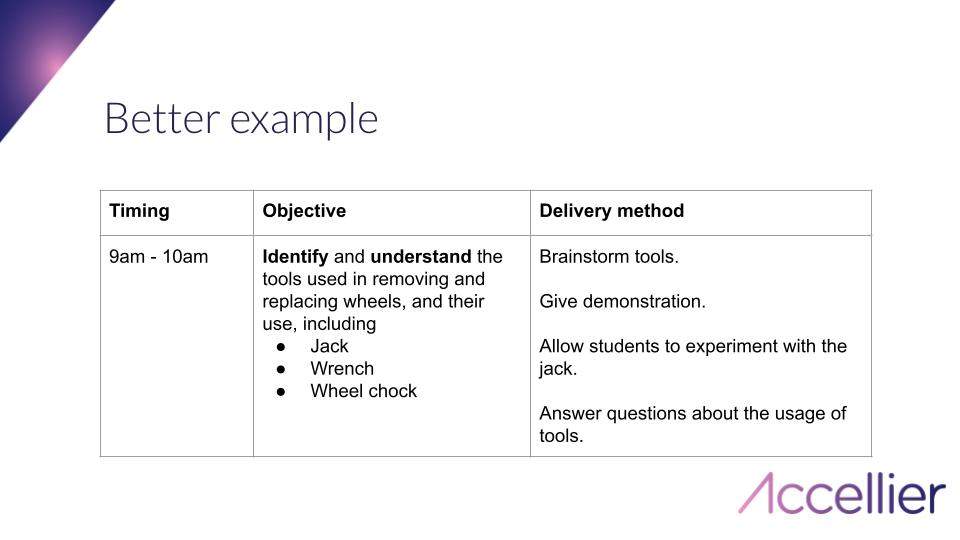
This better example shows timing, clear and specific objectives, and the method for achieving those objectives.
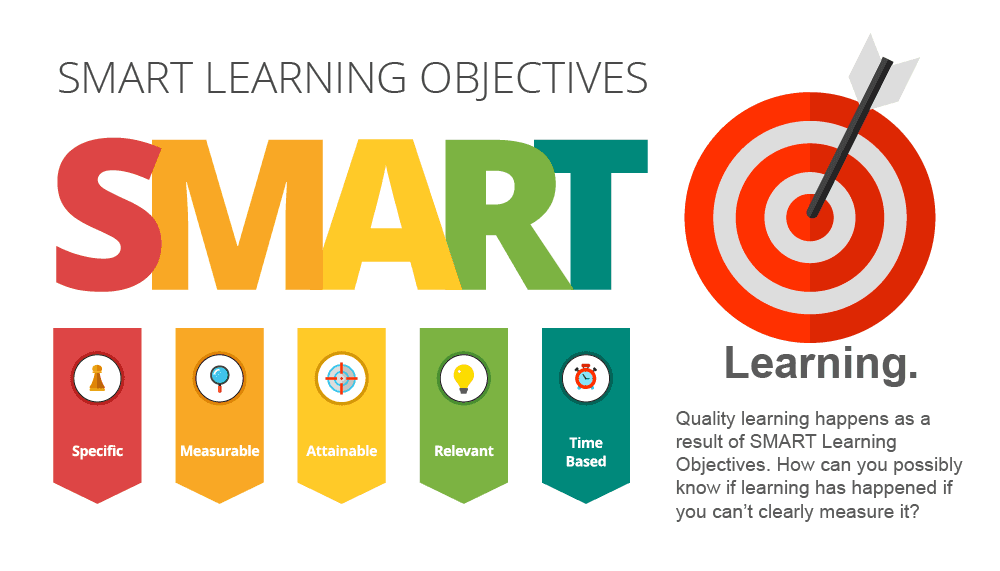
2. Good trainers use SMART objectives
Which one of these objectives is SMART?
3. Good trainers don’t cram too much in

Avoid the firehose method.
While it may seem noble to try to maximise the value for students by covering more content in the time allocated, it may not be the best use of time when it comes to actually learning.
Good trainers know that students tend to remember powerful emotional experiences more than just a firehose of content.
Ask yourself:
- How much of this will they actually remember?
- How can we use this time more productively?
A well thought-out learning activity will be far more valuable than just delivering as much content as you can fit in to the session.
4. Interrupting Forgetting
The “Forgetting Curve” (First described by Ebbinghaus circa 1880) is a visual representation of how people forget what they’ve learnt over time.
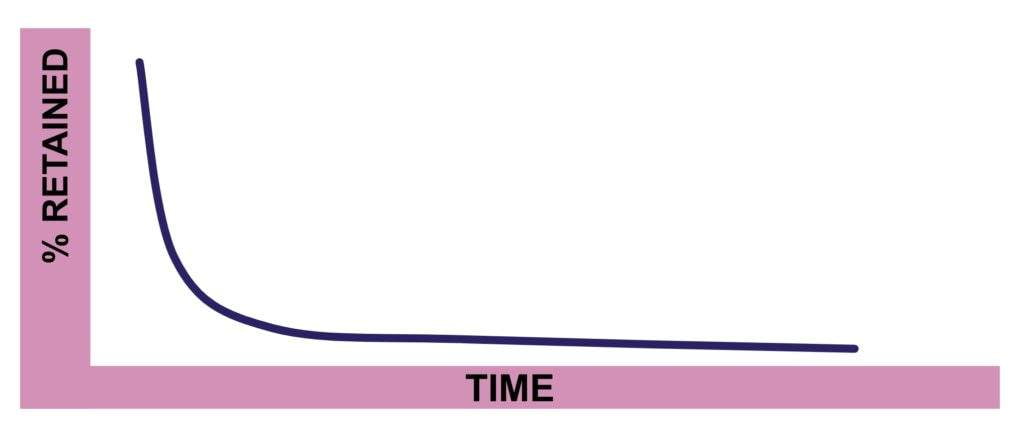
As you can see there is a very rapid drop in the amount of knowledge retained.
However look at what happens when practice is introduced:
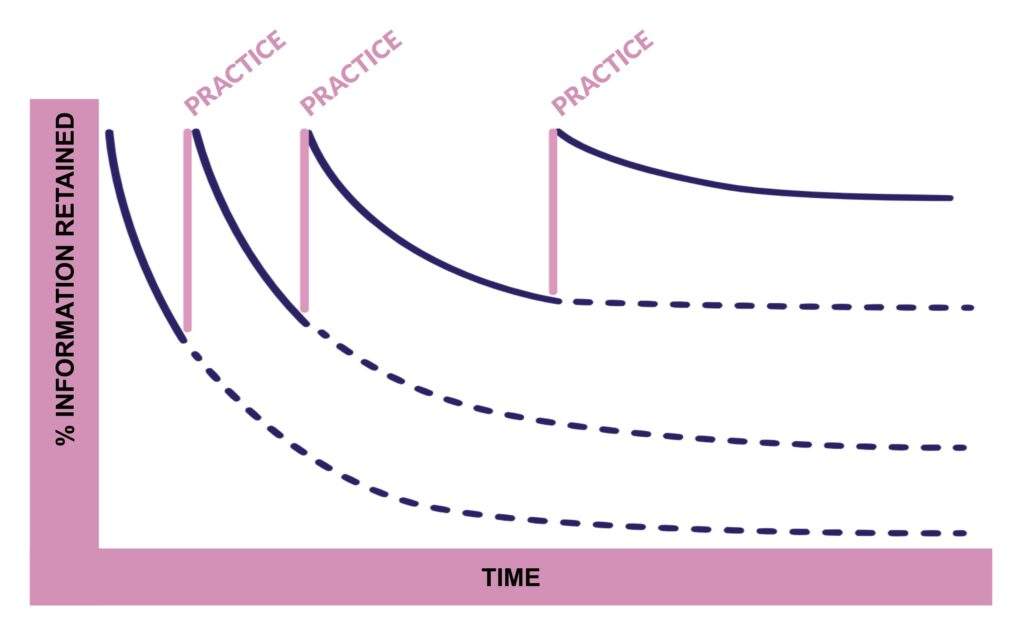
Notice how the practice is “spaced” with longer increments? The spacing of practice is increasing over time, and the forgetting curve is ‘smoothing’ over more practice.
Research has revealed that spacing the practice out over increasingly longer periods of time helps to create stronger and more lasting knowledge.
This also allows for ‘retrieval’ practice.
This allows the learner to retrieve what they’ve learnt from long term memory into working memory, so they can use and practice their skills and knowledge.
It’s even better if the activities that the student uses during retrieval are as close to real world settings as possible. It’s not helpful for the learner to only learn the knowledge in a way that does not replicate the real workplace.
5. Good trainers focus on performance and skills
Aim to get students ‘doing’ as soon as possible.
However it must be stated that safe work is important (do not “throw them in the deep end” when there is risk of injury, damage to equipment or property).
If it’s primarily knowledge-based learning, consider how the student will they use the knowledge (retrieval).
For example, a driver is better off practicing driving at 50km/h in a residential area, than simply knowing that the road rules state a 50km/h speed limit.
6. Good trainers ‘measure’ learning.
A pilot flying a helicopter is constantly checking her instruments and making slight adjustments with the controls.
Similarly, a good trainer will frequently monitor student’s learning and make corrections, adjustments and change approach if needed. It’s not helpful to plough through into more advanced learning when the majority of students are struggling with the basics.
Good trainers will:
- Check, correct, repeat.
- Remove support as appropriate.
- Measure performance against objectives.
7. Good trainers give good instructions
Most teachers have had the experience of setting an activity, explaining what students are to do (often repeating it) only to have students ask… “Um, so, what are we meant to be doing again?”
Good trainers become good at giving clear instructions verbally. But they also:
- Back it up with good written instructions
- Provide examples and demonstrations where relevant
- Check to ensure students understand what is being asked
- Monitor students completing the activity and provide support, guidance and clarification as needed.
8. Good trainers give good feedback
It’s difficult to learn something when you don’t have feedback on how you’re performing. How can you know if you’re learning? How can you know how well you’re progressing? Good trainers help with this by providing clear feedback.
A common model is the “PIP” method:
- Praise – highlight something the student is doing well
- Improvement – what are the key things the student needs to do to improve their performance?
- Praise – finish with a positive note
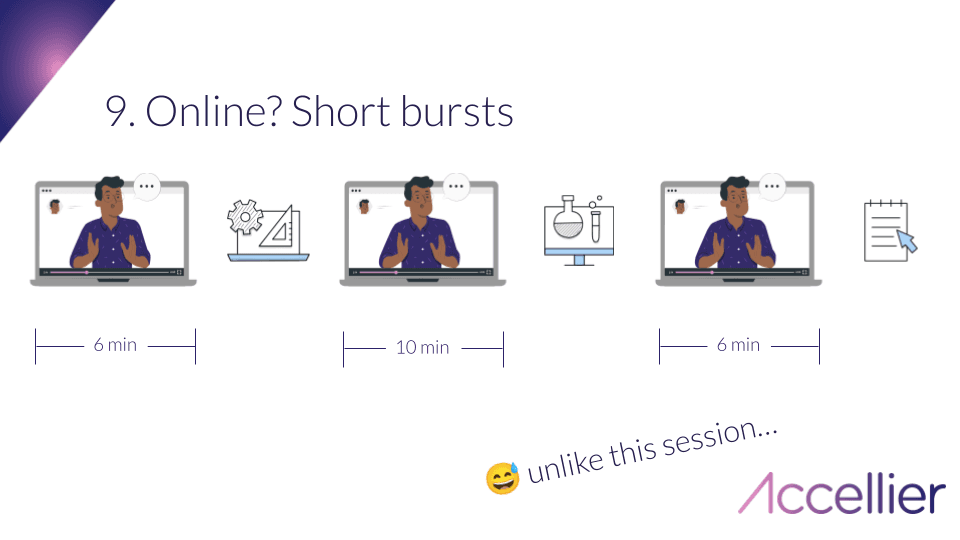
9. Delivering synchronous online sessions? Good trainers deliver in short bursts and have lots of activities and engagement in between
Various studies have proposed that online videos in courses should be short (depending on the study between 6 and 15 minutes). For example: Videos as learning objects in MOOCs: A study of specialist and non-specialist participants’ video activity in MOOCs
Christian Stöhr,Natalia Stathakarou,Franziska Mueller,Sokratis Nifakos,Cormac McGrath
See also https://blog.edx.org/optimal-video-length-student-engagement
Borrowing from this research – and anecdotally from most of our own experience sitting through dreary online presentations – we can conclude a similar principle may apply in online delivery via platforms like Zoom.
10. Good trainers review, reflect, improve.
Good trainers know they are never going to be perfect, yet they continue to strive for excellence. They actively review their lessons and reflect on their performance.
Good trainers wonder about what they could do next time to make it an even better experience for their learners.
They read books, and attend professional development sessions as they seek to continually improve themselves.
I find that trainers like this are usually far more passionate and engaged. They seem to really love what they do and so naturally chase opportunities to get even better at it.
10 things that good trainers do are:
- They set good objectives
- They focus on achieving outcomes, not ‘content delivery’
- They don’t cram too much in
- They interrupt forgetting with interleaved and spaced practice
- They focus on performance and skills
- They measure and adjust
- They give clear instructions
- They give great feedback
- They use short bursts online
- They review, reflect and pursue excellence
Find out more about our free trainer professional development, and why we are so passionate about quality training
Case Studies
Accellier Success Stories
Developing Taronga’s Next Generation of Workplace Trainers
How Accellier helped senior zoo keepers from Taronga gain their Certificate IV in Training and Assessment.
Accellier and NSW National Parks
Accellier was approached to assist over 50 highly skilled professionals within the organisation achieve Certificate IV in Training and Assessment.
Department of Planning, Industry and EnvironmentAccellier Graduate Story: Marion
Marion, a successful Accellier Certificate IV in Training and Assessment graduate tells her story.
Qualified visual arts trainer video